
The engineering exports in the first month of 2009-10 plunged to $2.78 billion from $3.8 billion in the same month a year ago, according to the Engineering Export Promotion Council. However, the decline in April was not as sharp as in March, when the exports contracted by 34 per cent over the same period last year.
The issue has assumed serious proportions now. Suranjan Gupta, senior joint director, Engineering Export Promotion Council, said, many containers were being detained in Europe, to the extent that the steel ministry convened a meeting last week to discuss the matter. Europe accounts for 70 per cent of India's annual engineering exports of $33 billion.

However, during April-January FY'10, exports declined to $26.12 billion from $34.19 billion in the same period previous fiscal.

Of the total $32.5 billion engineering exports in 2009-10, EU accounted for about 30 per cent.

The exports stood at $4.21 billion in June in 2008. Engineering exporters are not hopeful of recovery in demand in the international market in the coming months.
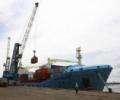
Exporters are now looking at new markets.
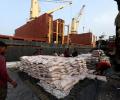
Indian exporters are unlikely to receive direct tariff refunds from the US's $166 billion payout, but the rollback of reciprocal duties is enhancing their pricing power and improving order prospects, particularly in textiles, apparel, and engineering goods.

Textiles, pharmaceuticals, chemicals, engineering goods, gems and jewellery exports will receive a boost from the free trade agreement between India and the 27-nation European Union, according to exporters.
Engineering Export Promotion Council has warned the government that growth in engineering exports will turn negative if the average rupee rate to a dollar falls below 40 during the year.
Even as the engineering goods sector, which has the largest share in the country's export basket, registered an export growth of 22 per cent (dollar terms) in the April-July period of this year, a recent study has revealed that the volume of exports has gone down in majority of the products manufactured by the sector, leading to job losses.

India pays 55% of the value of oil its imports from Iran in euro payments through Turkey's Turkiye Halk Bankasi.
National Aluminium Company Ltd has won the Engineering Export Promotion Council's All India Export award in the "star performer" category for 2005-06, the firm said on Friday.

The additional 25 per cent tariff imposed by US President Donald Trump on India is set to deliver a major blow to West Bengal's export-driven economy, with the state's labour-intensive leather, engineering and marine sectors expecting losses ahead of the festive season, stakeholders said. The increased levies on Indian products for the country's purchases of Russian oil came into effect on Wednesday, bringing the total amount of tariff imposed on New Delhi to 50 per cent.
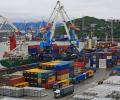
The country's exports rose marginally by 0.61 per cent to $36.56 billion in January, while trade deficit widened to a three-month high of $34.68 billion, government data showed on Monday.
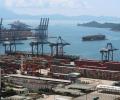
With the Iran war escalating sharply and crisis deepening in the global energy market, India on Monday unveiled a coordinated plan to support exporters and shippers caught in the fallout.

India's merchandise exports in October rose by 17.25 per cent to $39.2 billion against $33.43 billion a year ago, according to government data released on Thursday. Imports increased by 3.9 per cent to $66.34 billion in October compared to $63.86 billion in the year-ago period.

A meeting of the Board of Trade, an advisory body to the Commerce Ministry, is likely to be held on October 11, a ministry official said.
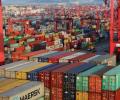
India's exports rose 9.03 per cent to $38.49 billion in April, the highest in six months, driven by healthy growth in sectors such as electronics and engineering goods, while the trade deficit widened to a five-month high of $26.42 billion. According to the commerce ministry data released on Thursday, imports increased by 19.12 per cent year-on-year to $64.91 billion in April due to a rise in shipments of crude oil and fertiliser.

After registering a positive growth for two months, India's exports slipped into negative territory again, contracting 2.17 per cent year-on-year to $38.73 billion in May due to a fall in global petroleum prices, while trade deficit narrowed at $21.88 billion during the month.
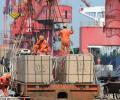
India's exports fell for the fourth straight month in June as shipments of key segments like petroleum and textiles declined but the country's trade turned surplus for the first time in 18 years as imports dropped by a steeper 47.59 per cent.
The survey revealed that firms were using a combination of measures like internal cost control and investment in new technology to combat the problem and stay afloat. There was a shift to a more capital intensive and labour saving manufacturing process in the small and medium scale sector. This meant significant downsizing in labour force on account of rupee appreciation.
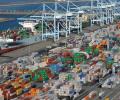
After remaining in the positive zone for three months, India's exports contracted 1.2 per cent to $33.98 billion in July, while the trade deficit widened to $23.5 billion.

The steep depreciation of rupee will not give an immediate advantage to the country's exporters.
India's exports grew by 67.39 per cent to $32.21 billion in May driven by healthy growth in sectors such as engineering, pharmaceuticals, petroleum products and chemicals, according government data released on Wednesday. Exports in May last year stood at $19.24 billion and in May 2019 it was at $29.85 billion, the commerce ministry's preliminary data showed. Imports in May rose by 68.54 per cent to $38.53 billion, from $22.86 billion in May 2020. In May 2019, imports stood at $46.68 billion.
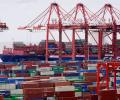
The country's exports for the first time crossed the $400 billion mark in a fiscal on healthy performance by sectors such as petroleum products, engineering, gems and jewellery, and chemicals, according to the commerce ministry's data released on Wednesday. The merchandise exports rose by by 37 per cent to $400.8 billion in 2021-22 until March 21 against $292 billion in 2020-21. Previously, the outbound shipments had touched a record of $330.07 billion in 2018-19.

Subdued demand from developed countries and blocs like the US and EU is impacting exports of key sectors including engineering, gems and jewellery and may have implications on India's exports in case the global situation does not improve in coming months. Global inflation, Russia-Ukraine war, simmering China-Taiwan crisis and supply disruptions are hurting economic growth worldwide, leading to poor demand, experts say. The world merchandise trade volume is expected to grow 3 per cent in 2022 against the earlier forecast of 4.7 per cent, mainly due to the ongoing war between Russia and Ukraine, according to the World Trade Organization forecast, released in April.

The Gems & Jewellery Export Promotion Council (GJEPC), the apex body set up by the Union ministry of commerce to monitor the jewellery business overseas, says it might call for pulling out of the diamond cutting and polishing business in China.

IT, IT-hardware, petroleum, engineering, leather and garments are the leading exports from the SEZs.
After the first quarter was washed out, exporters are now keeping their fingers crossed over a turnaround in outbound shipments to at least North America from September onwards. This comes even as other key destinations such as Europe may take longer to revive in FY24. Slowdown in key economies, as well as geopolitical tensions resulted in sluggish demand for Indian goods.
Uncertainty looms over India's export outlook, with the new Covid-19 variant Omicron spreading rapidly across the country's key shipment destinations. With the US and parts of Europe witnessing more than 100,000 Covid-19 cases a day, exporters expect some disruption. However, there may not be an immediate decline in exports from India because the order books remain strong at least for the next few weeks, they said.
The Engineering and Export Promotion Council will send a 15-member delegation to China in February-March, 2005, to explore export potential, its chairman Rakesh Shah said.

Snapping the two months slide, the country's merchandise exports rose marginally by 0.5 per cent to $34.58 billion in September while trade deficit narrowed to $20.78 billion. According to official data released on Wednesday, imports increased by 1.6 per cent to $55.36 billion in September compared to $54.49 billion in the year-ago period. The trade deficit, or the gap between imports and exports, was $20.8 billion during the same month last year.

Engineering Export Promotion Council (EEPC) of India has urged the Centre to extend lower corporate tax benefit to Limited Liability Partnerships (LLPs) and proprietary firms as it would make funds available with MSMEs and boost private investment cycle. A body of direct tax professionals also sought for reduction of tax burden on individuals and requested the government to raise the income tax exemption limit at Rs 2.5 lakh to Rs 4 lakh per annum in the upcoming budget for 2022-23 fiscal. EEPC India chairman Mahesh Desai claimed around 84 per cent of small businesses are being denied the benefit of lower corporate tax which was aimed at providing industrial units with more investible surplus.
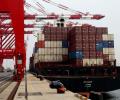
Economic recovery from the pandemic in the US has helped India achieve the $400-billion mark for exports for the first time in any fiscal year. According to the preliminary data compiled by the Department of Commerce, India exported goods worth $73 billion to the US from April 1 to March 21 - up 47 per cent, compared to last year. The US' share of exports, compared to total exports, stood at 18.2 per cent. The country is also India's largest trading partner and export destination.
.jpg)
Depreciating rupee a silver lining for some businesses amid the economic downturn.

As the liquidity crunch reaches crisis levels and getting tax refunds remain a big headache, exporters saw orders fall by 15 per cent till October.
Speaking at the function, Nath asked exporters to provide inputs for a mechanism for refund of local taxes to them. "We are in the process of formulating the scheme and will incorporate valid suggestions from exporters," he said.
Imports during October also rose by 17.62 per cent to $44.11 billion, leading to widening of trade deficit to $17.13 billion.
